
Beaune in Burgundy, France
Nestled in the heart of Burgundy, Beaune is a charming French town known for its medieval hospital, stunning architecture, and world-renowned wine culture.
It isn’t the biggest of towns, but it is certainly one that people have been flocking for centuries.
Where to stay
History
Back in Roman days, Beaune was known as Belena, which was the name of a spring around which the settlement was established. It was already a thriving viticultural wine region.
Beaune was along the road for trade and travel between ancient Paris Dijon and Lyon. Eventually it became part of the territories of the powerful Duchy of Burgundy.
And it was in the Middle Ages in the 15th century that Beaune really hit its stride. In 1442 by Nicolas Rolin, chancellor of the Duke of Burgundy, and his wife Guigone de Salins built the hospice Hotel Dieu as a charity hospital for wounded soldiers and the needy.

People flocked from far and wide to Beaune to enter into the hospice’s care. In 1477, the male lineage of the Valois dukes of Burgundy became extinct.
At the same time following the marriage of Mary of Burgundy to Maximilian I of Austria (Holy Roman Emperor), the title “duke of Burgundy” shifted to the Habsburg monarchs.
However Beaune continued its tradition of treating the sick and injured under its new rulers. It would have to, having been caught up in the French wars of religion.
Beaune was occupied by the Austrian army in 1814 during the Napoleonic wars, and later served as an American base during the First World War. Over 2 million men served there and the American military hospital built on the outskirts of the city would be one of the largest in Europe.
The city was occupied again from 1940-1944 by the German Reich during the Second World War. Today it is a lively city, once again dominated by vineyards and tourists, looking to experience all that this part of Burgundy has to offer.
Best things to do
Hôtel Dieu de Beaune
One of the crown jewels of Beaune’s history is the Hôtel-Dieu, a 15th-century hospital founded by the Duke of Burgundy, Philip the Good, and his chancellor, Nicolas Rolin.

With its distinctive polychrome roof, it served as a beacon of hope for the sick and needy. Today, the Hôtel-Dieu stands as a testament to Beaune’s rich past and continues to captivate visitors with its historical charm and artistic treasures.
Place de la Halle
Place de la Halle is the vibrant heart of the city of Beaune, lined with plenty of cafés, restaurants, and shops.

This bustling square is a great place to relax with a glass of local wine and soak in the town’s lively atmosphere. If you’re visiting on market days, this area becomes even more animated with fresh produce, local cheeses, and artisan goods on display.
Hotel des Ducs de Bourgogne – Musée du Vin
For wine lovers, the Musée du Vin, located in the historic Hôtel des Ducs de Bourgogne, is an essential stop.

The museum takes you through the history of winemaking in Burgundy, displaying old wine presses, tools, and historical artefacts. It is a good introduction to the area’s viticultural heritage before heading to a local tasting.
Basilique Notre Dame de Beaune
This stunning Romanesque-Gothic church dates back to the 12th century and houses impressive frescoes and stained-glass windows.

The peaceful ambiance and intricate architecture make it a worthwhile stop for those interested in history and religious art.
Market days
Market days take place on Wednesday and Saturday mornings. The Saturday market is the largest, filling the town with stalls offering fresh produce, gourmet cheeses, charcuterie, truffles, and handmade crafts.

It is the perfect opportunity to sample local flavors and bring home a unique souvenir.
Burgundy wine region
Along with Bordeaux, the big-name in French wines is the Bourgogne (Burgundy) region around Beaune. It has the highest number of AOCs in France, with no less than 37 Grand Crus. Some of the most famous names in French wines like Chablis Grand Cru, Corton, and Clos de Vougeot come from Burgundy.
There are several tour companies taking visitors to visit the vineyards from Beaune. Red wines from Burgundy are usually made from pinot noir grapes, while white Burgundy wines made from chardonnay grapes.
Chablis (white wine) is the most famous name we tend to hear from Burgundy, and but Côte de Beaune also has an equivalent 7 white grand crus in the area. For reds, Côte de Nuits has 24 grand crus, mostly pinot noir reds that are some of the most expensive wines in the world.
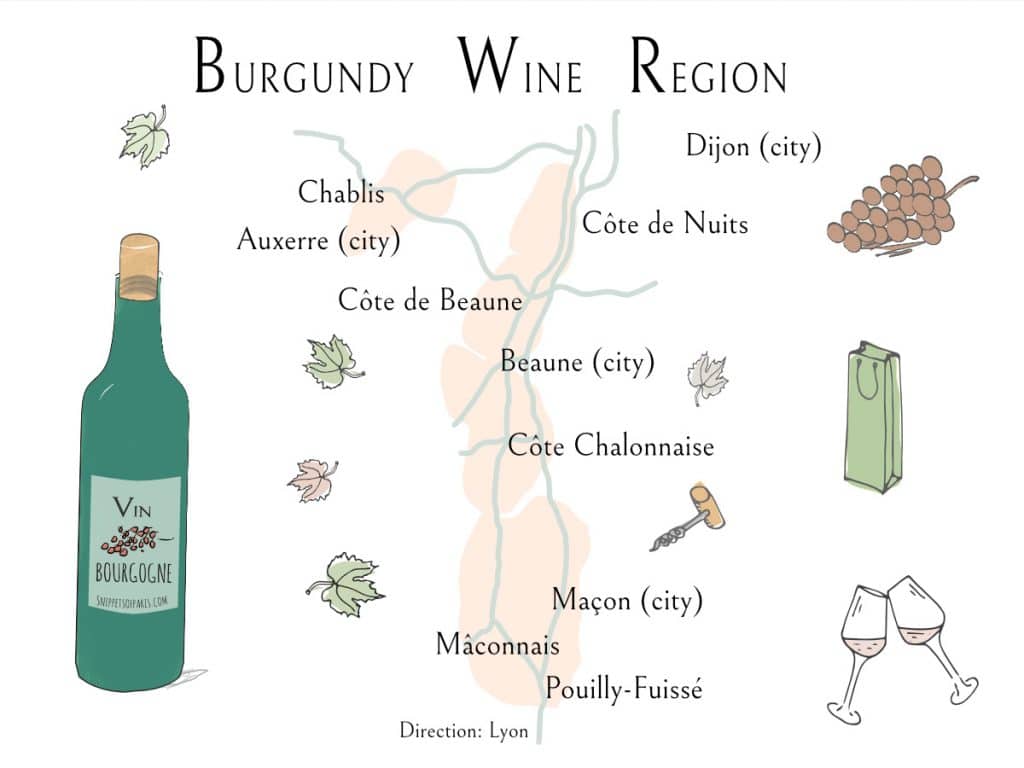
Until 2017, all Burgundy wines were AOC/AOP wines, with Vin de Pays being a new appellation for this region. There are 5 main areas in Burgundy including Chablis, Côte de Nuits, Côte de Beaune, Côte Chalonnaise and Mâcon.
Some of the best Burgundy wines are:
You can read more about Burgundy wines here, and book a wine tasting tour here.
Local specialties
Beaune has several restaurants that serve local Burgundian dishes like the Boeuf Bourguignon, fondue bourguigonon, gougères, etc. The nearby capital of Burgundy is Dijon, which is famous for its dijon mustard.
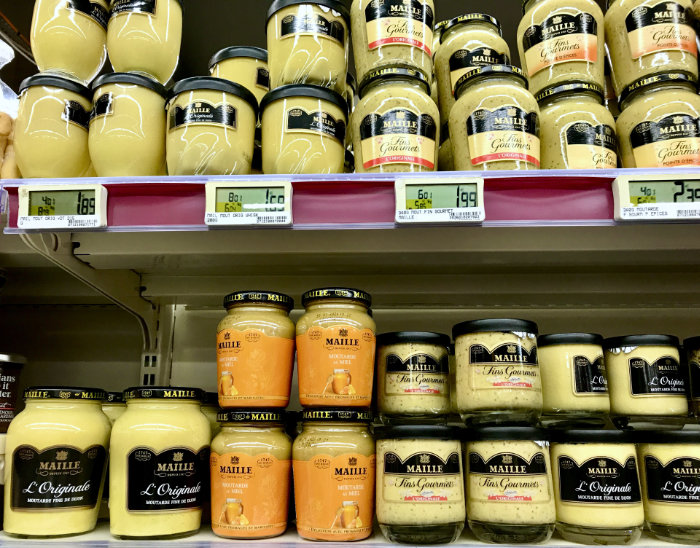
The area is also famous for its French cheeses such as Mont d’Or, Comté, and more. You can purchase some of these specialties in the shops around Beaune, and even get some as souvenirs to take home.

How to get to Beaune?
Beaune is about 190 miles (310 km) from Paris, which takes about 3 hours to drive by car. You can also get there from Paris by train from the Gare de Lyon station directly to Beaune or via Dijon.
The closest large airport is in Lyon and Grenoble in France, or Geneva and Basel in Switzerland.
How easy is it getting around?
The center of Beaune is quite compact and easy to walk around. It is also relatively flat, making it easy for wheelchairs and strollers.
How many days should you spend?
You can see all the main sights of Beaune in a day, but you may want to stay overnight in order to tour the wineries around Burgundy.
When is the best time to visit?
Beaune hosts the “Fête des Grands Vins de Bourgogne” every November which is also when it holds a semi-marathon called the “Semi-Marathon de la Vente des Vins de Beaune”.
Both events attract plenty of visitors from across France, selling out hotels and accommodation in Beaune.