French word of the day: Le compte rendu
Published: 21 Oct 2026
Well France is making a lot of international headlines lately, and it has been quite a mixed bag to say the least. I’ve seen plenty of writers/influencers based in France who prefer to say, “oh it wasn’t that bad”, or “it just looks bigger on screen”, etc. I am not one of those people.
Things always seem ‘far away’ until it happens to you. Listening to the shop owners and frightened residents who were in their apartments in Paris in Chatelet and the 10th arrondissement where I used to live many years ago, I don’t need to imagine very hard to be appalled.
But I will provide some historical context for all these events, because perhaps that part is not particularly clear for those looking in.
I had intended to write about the Pope earlier, but I was also expecting the protests to have extinguished by now. It seems like a lifetime ago now but there were about 4 days of highs with the Pope Leon XIV’s visit at the end of September, where everyone was standing arm-in-arm and singing church songs melodically in tune.
About 800,000 people turned out in Paris for the grand mass on the Place de la Concorde on the 25th of Sept, with a total of 1.2m out to greet the Pope on that day alone. Result: there was a large police deployment and no incidences to speak of.
Whiplash to 2 weeks later, this past Saturday 17 October and the shocking videos and images we’ve all seen about the destruction that took place on Saturday in several French cities. There were far fewer people gathered in Paris on that day, and authorities are investigating “how this spun so out of control”.
I’m sure President Macron is wishing he “kept” the Pope longer in France, just to have the the happy pacific images from earlier on the international news. (Historical side note to lighten the mood, the Roman Catholic Popes have been “kept” in France a few times over the centuries:
- From 1309 to 1376 during the Avignon Papacy when King Philip le Bel decided that his choice, the Archbishop of Bordeaux, should become Pope Clement V and not some other guy so ‘arranged’ for the papacy to move to France. Pope Clement V and the following 6 Popes were all French and the papacy reigned from the Palais des Papes in the provençal town of Avignon. Eventually Pope Gregory XI decided that he liked Rome better and moved back in 1376. (Maybe he preferred pizza and pasta to bouillabaisse?)

- From 1798 to 1799, Napoleon Bonaparte decided that Pope Pius VI should be more accommodating to his conquering adventures, and decided to move him to the French city of Valence. When Pius VI had the audacity to defy him by dying, Napoleon started working on his successor Pope Pius VII. Pius VII was brought a prisoner to the Château de Fontainebleau just outside Paris in 1809 and was not released until Napoleon was forced to abdicate in 1814.
Along with all this French papal history, there is also the legend of the siblings Mary Magdalene, Martha and Lazarus coming to Provence after the crucifixion to spread the word. All this is why France is often called the “eldest daughter of the Catholic Church”.)
Anyway, while President Macron is probably regretting his decision to let Pope Leo XIV leave, the rest of us have been holding our breath, because just about immediately, the protests started.
While the violent looting on Saturday had nothing to do the previous student protests, the casseurs (looters) were able to mix in and hide alongside legitimate demonstrations that are snowballing into many different areas of economic and political life.
Part of the reason for the authorities’ unpreparedness is because this past Saturday was actually supposed to be ‘quiet-ish’. Schools have just gone on 2 weeks holiday for Toussaint (All Saints’ Day).
Holidays again, you say? If you are wondering there 2-week holiday when they just started in September, well that would be why the students initially started protesting.
In order to keep the tourist industry and teachers’ unions happy, schooling in France is compressed into 8:30-17:00 on average Mon-Tues-Thur-Fri making for rather long days, along with about 1/2 day-Wednesdays. In exchange for these long days, French school holidays are around 16 weeks, compared to 12 weeks over the year in Germany or the U.S.
(No, the students weren’t complaining about having too many holidays, but we must state the obvious cause and effect! And this has all been going on for decades, but the real trigger for the discontent was a Sept 1st ban on phones inside high schools. Sounds stupid I know, does anything makes teens as cranky as taking away their phones? I digress.)
Add to this you have the overall lack of funding and missing replacement teachers in schools. Continuing the snowball, add more voices from the general population decrying the decline in pouvoir d’achat (buying power), high gas prices, increasing taxes, ballooning deficit and just a general “fed-upness”.
So how did we get from the voices of democracy to scenes of shops and townhalls being vandalised and ransacked? Now, as much as we can claim to be shocked by all this, the French have always had a cultural affinity towards violent protest and resistance as a ‘defence mechanism’.
While the U.S. has the 2nd amendment, other European countries like Switzerland, Denmark, Sweden, Austria, Croatia, Cyprus, Estonia, Finland, Greece, Latvia and Lithuania have mandatory military conscription. France on the other hand, doesn’t require its citizens to have military training, but does presume that “the streets will rise up” if the government tries to go down a ‘politically unpopular path’.
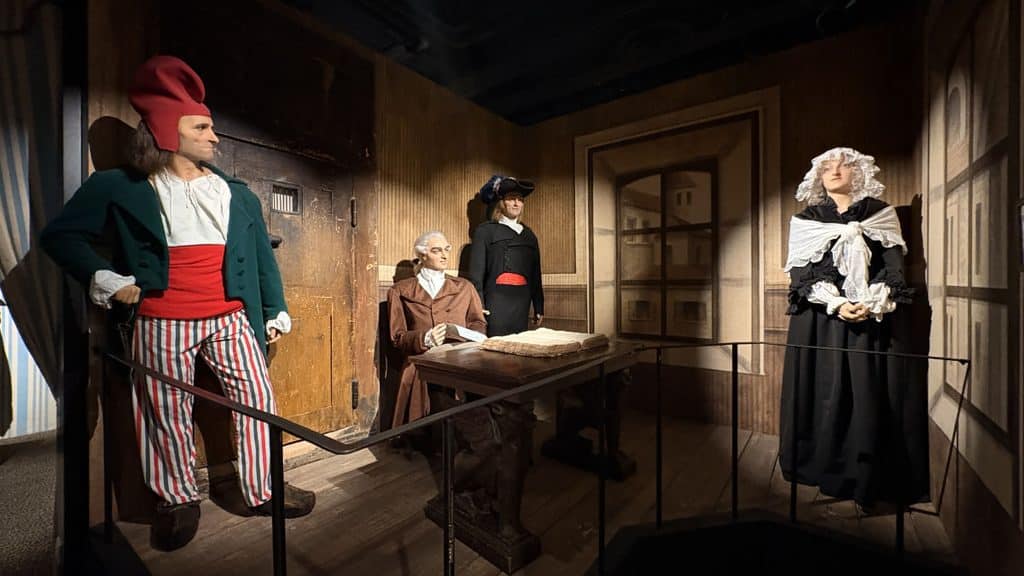
And that’s because this is what the country has been built on. The biggest example was of course the storming of the Bastille on July 14 1789 when King Louis XVI (aka Marie-Antoinette‘s hubby) tried to convene a Estates-General meeting in May 1789 to raise new taxes. The ransacking of Versailles and other royal palaces went rather well for those revolutionary ransackers, if less well for those in charge. (It was not a straight line to the French Republic, but you can read more here.)
Then you have the other biggie, World War II. When France was invaded and the puppet government of Marechal Petain was ceding things left-right-and-center to the Germans, it was the underground French resistance movement who risked their lives using every hook and crook to sabotage everything they were able to gain access to. And we all know that that history was on their side.

So there is a real romanticism and political reluctance to *stop* a culture of violent protest that in fact have served the country well in its history.
There have been other big protests more recently, such as the May 1968 protests and the 2018 Gilet Jaunes movement, where the government was proposing unpopular taxes, and again “the street” won. Even in cases of something as banal as PSG’s Champions League victory earlier this year in May, the preference was to try to contain, rather than stop all together.
So while the peaceful protestors on Saturday did largely outnumber the violent ones, we would be lying if we said that the fires set and looting was entirely surprising.
The real question now though is in the age of 24-hour news and viral social media, is the French silent majority really going to continue to tolerate this?
More protests have already been announced on October 31 and November 5th. The next presidential election is a less than 180 days away.
In other news:
- The 2 paintings that had been stolen from the Renoir museum in Cagnes-sur-Mer back on September 8th, have now been recovered and 5 people have been arrested. The paintings in question were by Renoir, namely the Madame Colonna Romano (1913) and Jeune femme au puits (1886).
- A book known as “The Apocalypse,” touted as the most expensive in the world, has been stolen in France. The book is famous for its bronze cover weighing 150 kilos that was made by Salvador Dalí and was on display at an art center in Puy-de-Dôme. (The stolen jewellery from the Louvre remains missing.)
- The Wall Street Journal did a deep dive into what they are calling “The High-Stakes Pursuit of Smuggling Butter Home From Paris“. All I can say to that is French butter is great, and you definitely should take some home with you.
- The historic Marché Couvert des Enfants Rouges in the center of Paris has been ‘completely destroyed’ in overnight fire 2 weeks ago. Apparently the roof and internal metal structure has collapsed, and it is not known yet what its future will be.
- A rather odd story, apparently 50 years ago, a 9-year-old Canadian kid stole a couple of stone fingers from a statue of Charlemagne from the Château de Pierrefonds (about 2 hours outside Paris). And this week, he mailed the fingers back, along with an apology note.
And in the blog:
14 Famous French saints and their legendary histories
Learn about the most famous French saints, including their history, places named after them, and more.
13 Tips for buying property in France: From château to pied-à-terre
Get to know the ins and outs of buying a property in France. From real estate vocabulary, the purchase process and signing the final sale agreement.
In 15 minutes or less, this delicious gnocchi cooked in a parmesan sauce makes a quick, delicious, and comforting dish perfect for any occasion.