
Angers: the ancient capital of Anjou, France
The ancient seat of the Counts of Anjou, Angers is a city with a rich history. When the 13-year-old Count of Anjou, Geoffroy Plantagenet, was married to a 25-year old widow named Mathilda in 1128 AD, he wasn’t expecting to give his name to a famed royal line of descendants.
But Mathilda was the grand-daughter of William the Conqueror. Anjou and the city of Angers would become part of England’s Angevin Empire, an lands that extended from Ireland to the Pyrenees mountains in southern France.
Today, the city is known for its stunning medieval architecture and rich culinary traditions.
Where to stay
- €€€ – Hotel Continental
- €€€€ – Hôtel D’Anjou
History
The history of Angers dates back to prehistoric times, with archaeological evidence indicating human settlements as early as the Neolithic period.
During the 5th century BC, the Andecavi, a Celtic tribe settled here, just north of the Loire Valley.
By the 1st century BCE, the area had become part of the Roman Empire, known as Juliomagus. The Romans built roads, transforming it into an important trading hub. It’s strategic location along the Maine River, made it an important cultural and political center.
During the Middle Ages, Angers became the capital of the County of Anjou. The Counts strengthened the city’s defenses by constructing the first fortress, which later evolved into the Château d’Angers.

By the 12th century, the area became central to European politics when the Count of Anjou, Geoffrey Plantagenet married Matilda, granddaughter of William the Conqueror.
Their son, King Henry II, became the first Plantagenet king of England, along with being Duke of Normandy. He in turn married Eleanor of Aquitaine, heiress to duchy next to Anjou and Normandy, effectively making him the ruler of half of France.

But the 100 Years’ war would soon take hold, with King Philip II of France, seizing Anjou in 1205. By 1360 the province of Anjou became a Duchy.
The Wars of Religion in the late 16th century brought turmoil, with Angers and the Duchy of Anjou seeing several conflicts. By the 19th and 20th centuries, Angers became known for its textile industry.
In September 1939, when Poland was invaded by Germany, the Polish government-in-exile settled in Angers. They left the city on 12 June 1940, after the invasion of France and Angers fell to the Germans.
It was liberated in August 1944 by General Patton’s US 5th division and French forces. Eventually reconstructed, the city now has a population of around 150,000 people.
Things to do
Chateau d’Angers and Apocalypse tapestry
The Château d’Angers is one of the most imposing medieval fortresses in France. The current castle was built in the 13th century by Saint King Louis IX, improving on the castle previously constructed by the Counts of Anjou.
The castle features massive stone walls and 17 defensive towers. It also houses a beautiful garden overlooking the Maine river.

One of its most treasured possessions is the Apocalypse Tapestry, a 103-meter-long tapestry commissioned by Louis I, Duke of Anjou, in the late 14th century.
Depicting scenes from the Book of Revelation, it is one of the largest medieval tapestry known to exist.
Musée Jean-Lurçat
Dedicated to modern tapestry, the Musée Jean-Lurçat is housed in the 12th-century Hôpital Saint-Jean.
It showcases the works of Jean Lurçat, a 20th-century artist who revolutionized tapestry-making. One of his most famous works is “Le Chant du Monde” (The Song of the World), a reflection on war, peace, and human destiny.
Musée des Beaux-Arts
The Musée des Beaux-Arts offers an extensive collection of paintings, sculptures, and decorative arts.

Inside there are works from the 14th to 21st centuries, with pieces by famous artists such as Jean-Baptiste Greuze and Jean-Auguste-Dominique Ingres.
The museum also provides insights into the history of Angers, featuring archaeological finds and historical artifacts.
Cathédrale Saint-Maurice d’Angers
The Cathédrale Saint-Maurice was constructed between the 12th and 13th centuries and is an architectural masterpiece of Angevin Gothic style.

As the seat of the Bishop of Angers, the cathedral has been a religious and cultural focal point in the city for centuries.
Maison d’Adam
One of the best-preserved medieval houses in France, the Maison d’Adam dates back to the late 15th century.
It features intricate half-timbered architecture and carved wooden figures, including mythical creatures and biblical scenes. Today, it houses a cooperative for local artisans, making it an excellent place to find handcrafted souvenirs.

La Doutre
Situated on the western bank of the Maine River, La Doutre is a historic district known for its cobbled streets and medieval buildings.
Highlights include the Église de la Trinité, a 12th-century Romanesque church and the Abbaye du Ronceray, an ancient abbey with origins dating back to the 11th century.

There are also a wide variety of charming cafés, shops, and art galleries.
Market days
Angers hosts several lively markets where visitors can experience local flavors and culture:
- Marché Lafayette (Saturday mornings) – One of the largest markets in the city, featuring fresh produce, cheeses, seafood, and flowers.
- Marché de la Place Leclerc (Wednesday and Saturday mornings) – A great place to buy regional specialties such as rillettes and Anjou wine.
- Marché du Quai Ligny (Sunday mornings) – Known for its organic products and artisanal goods.
- Les Halles d’Angers (Open daily) – An indoor market offering gourmet products, from charcuterie to freshly baked bread.

Local specialties
One of the local specialties in and around Angers is the Loire valley wines. Although not as famous as other French wines, they have a following of their own and are gaining in popularity.
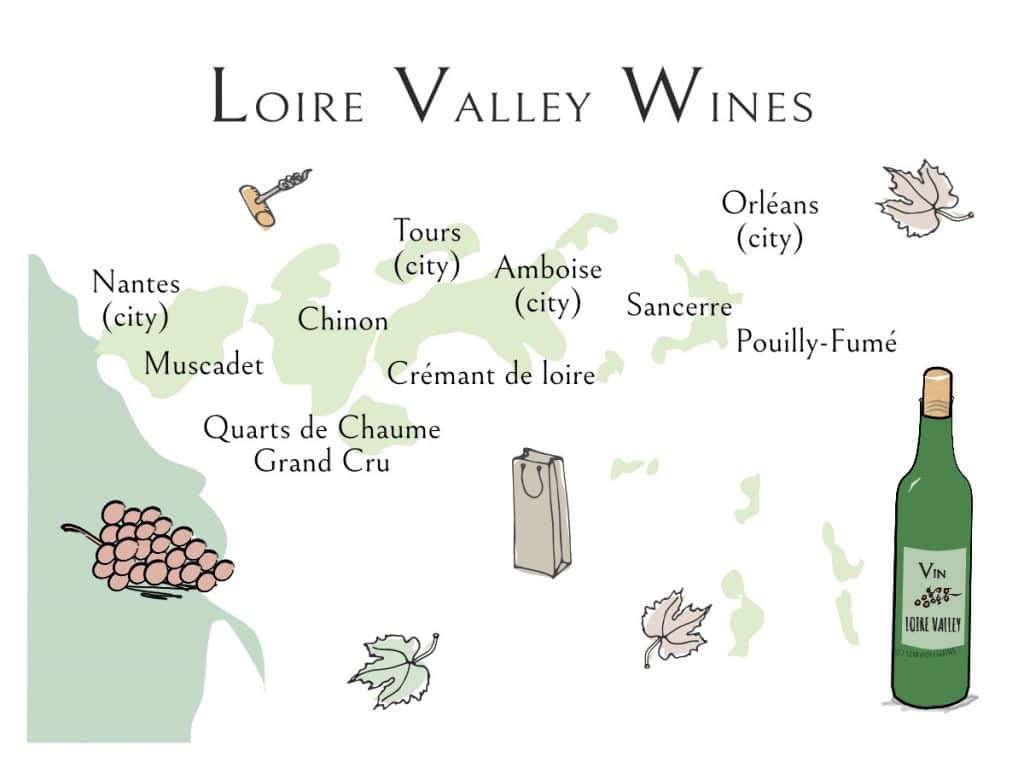
In between Nantes and Tours, the Loire Valley mostly produces white wines, but there are some red wiens as well. The area is the second-largest concentration of sparkling-wine producing vines in France after the Champagne region.
Having French royalty like François I and Catherine de Medici nearby as well as the British royals, meant that their courtiers and followers all got used to drinking wines from the Loire Valley, and effectively marketed the wines to other nobles and royals around France and Europe.
There are many wine-tasting tours that will combine with chateaux visits in the Loire Valley.

When is the best time to visit?
One of the most notable events is Premiers Plans, a film festival held in late January. This festival highlights emerging filmmakers and showcases a selection of short films and animated movies.
Another event is the Tempo Rives Festival, a summer music festival held from July to early August. This open-air festival takes place along the banks of the river, with a mix of world music and jazz.
Additionally, the Les Accroche-Cœurs Festival in September transforms the city into a stage for street performances, theater, and artistic installations.