How to make French hollandaise sauce (creamy & tangy)
Ingredients
 | 3 egg yolks |
 | Juice of 1/2 a lemon |
 | 200 g butter |
 | (Optional) pinch of cayenne pepper |
 | Pinch of salt and pepper |
How to make hollandaise sauce
- Start the base: Place the egg yolks in a small heatproof bowl with 2 tablespoons of cold water. Whisk thoroughly until the mixture becomes pale and slightly foamy. This step helps create volume.
- Melt the butter gently: Heat the butter in the microwave on low power just until fully melted. It should be warm and liquid, not bubbling hot. If it’s too hot, it will cook the eggs, and that’s breakfast, not sauce.
- Set up the bain-marie: Fill a saucepan or wok with a few inches of warm (not boiling) water and bring it to a gentle simmer. Place the bowl with the egg mixture over the pan, ensuring the bottom of the bowl doesn’t touch the water. This indirect heat keeps things controlled and smooth.
- Whisk to thicken: Continuously whisk the yolks over the gentle heat until the mixture becomes light, frothy, and slightly thickened. Patience is key here.
- Incorporate the butter: Slowly drizzle in the melted butter while whisking constantly. Add it in a thin stream so the sauce emulsifies properly. The mixture should thicken into a smooth, glossy sauce.
- Finish and season: Stir in the lemon juice while whisking to brighten the flavor and balance the richness. Season with salt and pepper, and add a pinch of cayenne if you want a subtle kick.
- Serve immediately: Keep the sauce warm (but not hot) until serving. Hollandaise is at its best fresh, silky, and poured generously.
Sometimes you just want to jazz up that dry and boring ol’ meal. Not to say that your cooking is boring, but you are looking for something more. So why not put a little fancy in your meal this weekend with this easy homemade hollandaise sauce recipe.
It may sound scary, but you too can make a hollandaise sauce as long as you have some eggs, butter, lemon juice and a good whisk. The hollandaise is almost as simple as making scrambled eggs, and it makes a great side sauce for a weeknight meal or something special for a weekend brunch.
The hollandaise sauce may be named after the Dutch, but it is one of the 5 mother sauces of French cuisine. It was supposedly created during the reign of Sun King Louis XIV (the one who built the Palace of Versailles) during the Franco-Dutch War of the 1670s, as part of a family of creamy sauces.
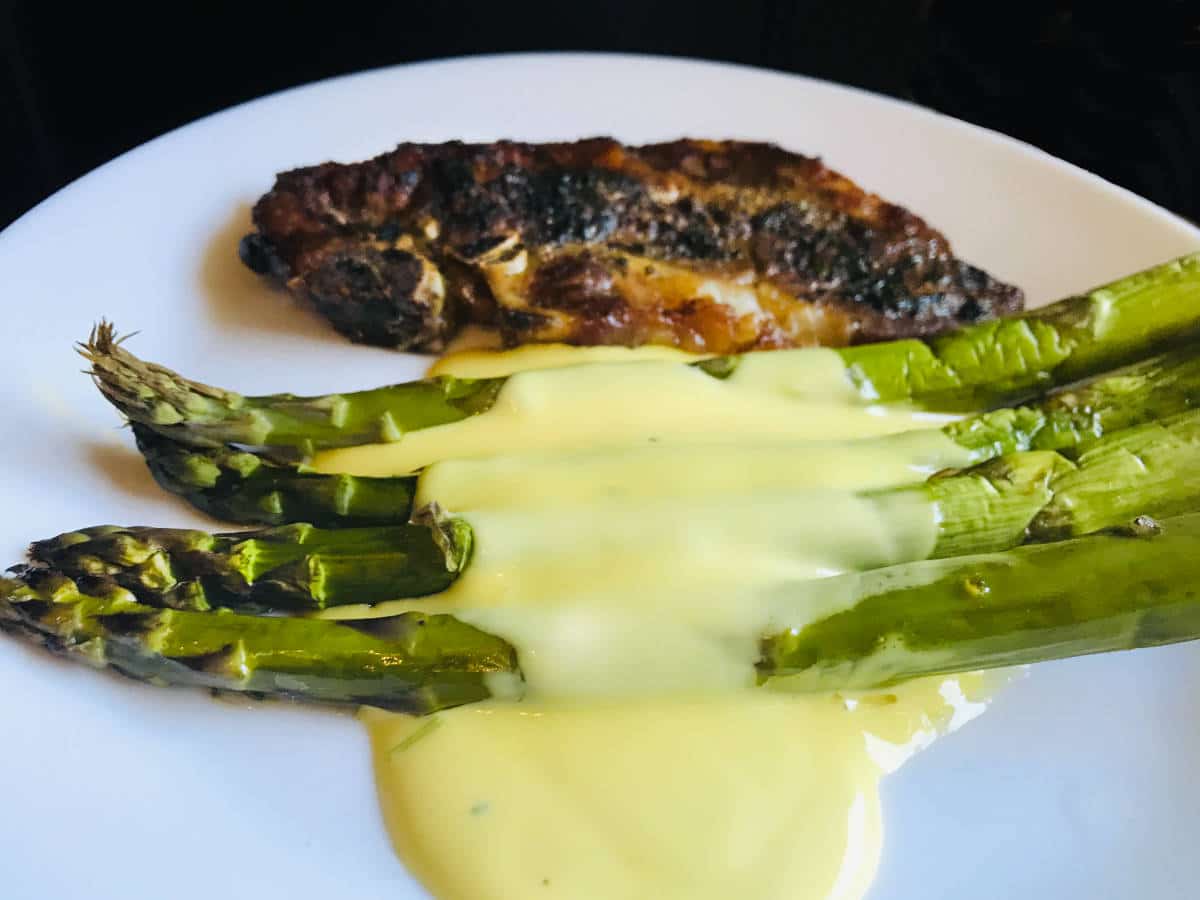
The hollandaise sauce is traditionally paired with asparagus, eggs benedict, or seafood, for eg. poached fish. But it is delicious and versatile enough that it can go with just about anything, with its rather creamy velvety texture and buttery taste.
Unsalted butter is best, but you can use semi-salted butter as well and just reduce the amount of salt you add.
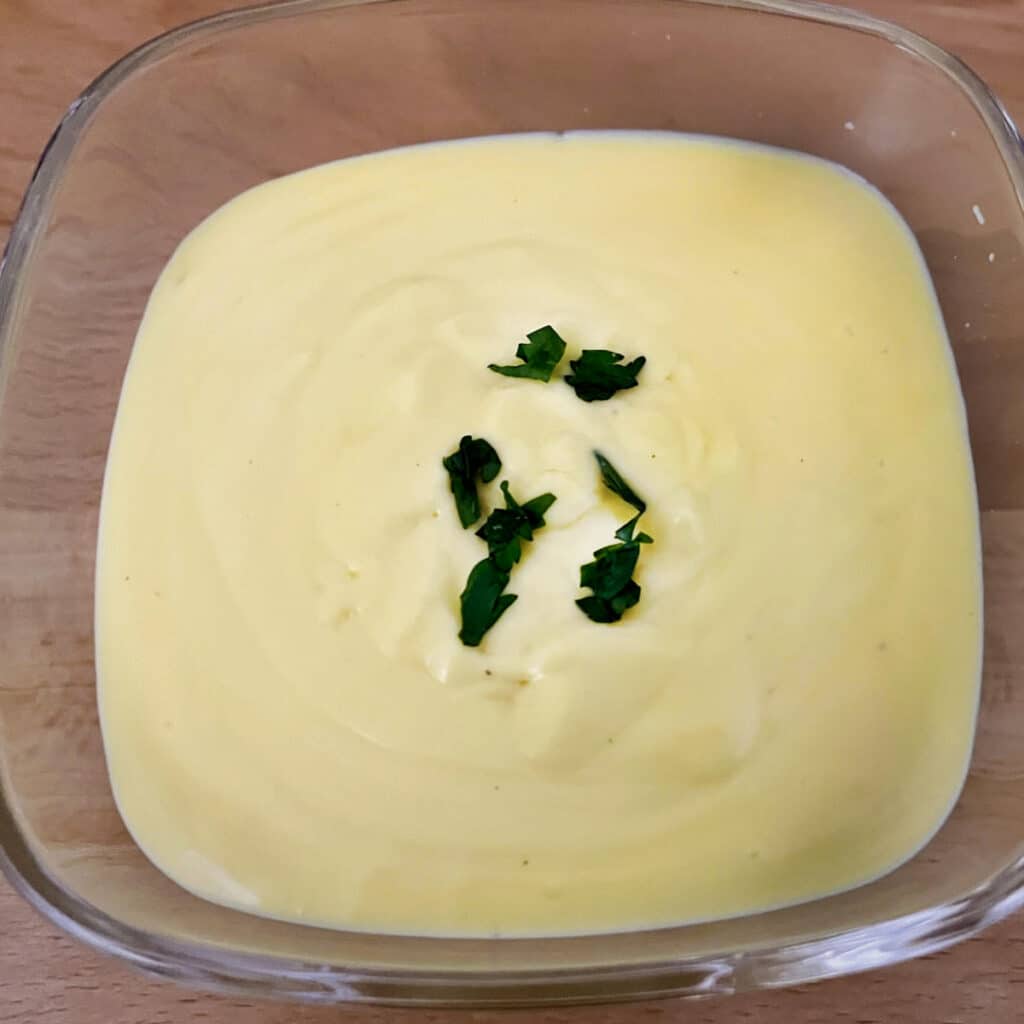
It is usually served warm, and is often used as a base for other sauces, like the famous sauce béarnaise. Now the part where it gets tricky is getting it the eggs and butter to emulsify without cooking, but there are tried and true french techniques to stop that from happening.
So in all, this is a great recipe to make at home. It’s simple and delicious, and just as good as any classic Hollandaise sauce you’d get at a fancy restaurant. But it is so much better because it’s homemade!
The Mother Sauce
The Hollandaise is one of the official 5 “mother sauces” by Chef Escoffier, and is itself an offshoot of the French mayonnaise. The hollandaise itself has many derivatives to compare:
- Hollandaise: sauce made from egg yolks, melted butter, and lemon juice.
- Tartare: sauce made from egg yolk, chopped pickles, capers and herbs such as tarragon and dill.
- Aioli: sauce made from garlic, egg yolks, olive oil, lemon juice, and mustard.
- Béaranaise: sauce made from egg yolk, butter, white wine vinegar, and herbs.
- Rouille: spicy sauce for a bouillabaisse. Made with egg yolks, olive oil, mustard, garlic, saffron, and cayenne pepper.
Preparing a Bain Marie
So brace yourself, the traditional French hollandaise recipe involves a french cooking technique called the bain marie. Which sounds a whole lot more intimidating that it actually is.
In order to get the eggs and butter to emulsify (i.e. to combine) the eggs need to be warm, but not too warm. So placing it on the stove is out of the question.
Sometimes called a bain chaud (meaning “hot bath”), it just involves placing your preparation bowl in a bigger dish that contains hot water. The technique involves slowly combining the eggs and the melted butter while the mixing bowl is in the bain marie.
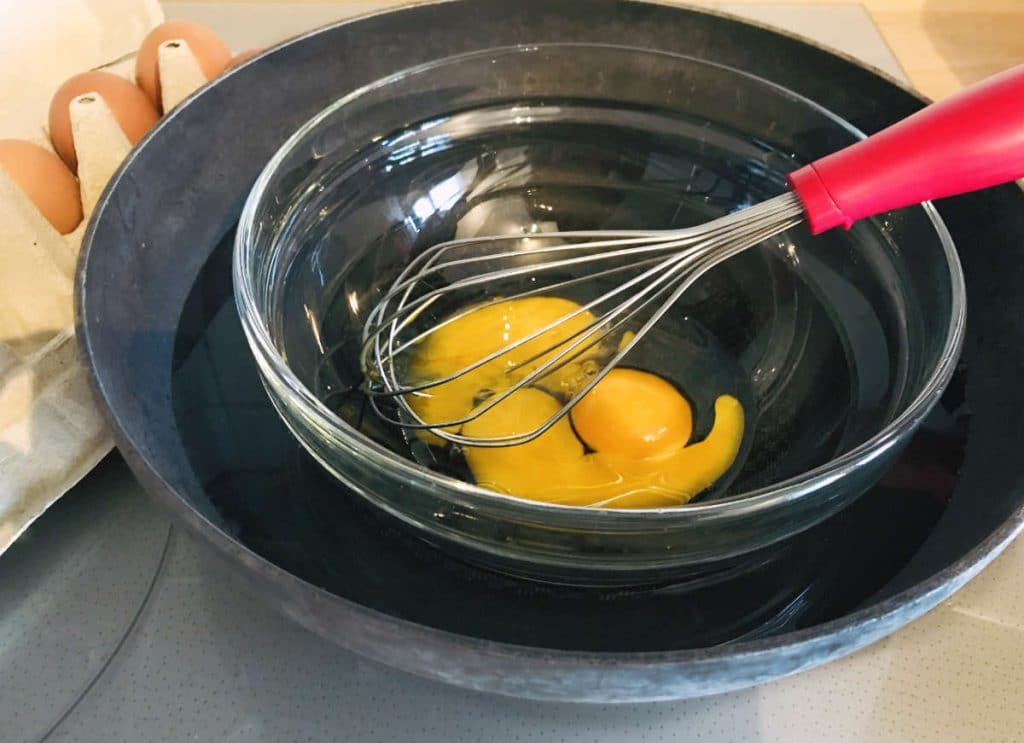
The temperature of the water for a bain marie should not exceed 150°F (65°C), as the eggs will start cooking, and you will have scrambled eggs instead. Around 3-4 cm of water is sufficient in the larger dish.
Now, some chefs will say that they mix the sauce hollandaise in a food processor. You could try it but for me, it is much simpler to make it quickly in a bowl rather than trying have to bring out and then clean up after a food processor!
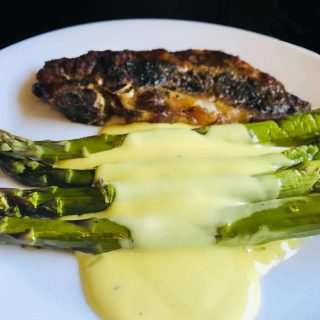
French Hollandaise Sauce
Equipment
Ingredients
- 3 egg yolks
- 200 g butter
- 1/2 a lemon
- Pinch of salt and pepper
- Pinch of cayenne pepper (optional)
Instructions
- Place the egg yolks in a small bowl, along with 2 tablespoons of cold water.
- Whisk the mixture well.
- Melt the butter in the microwave at a low temperature, until it is soft.
- Prepare a bain marie as follows: Place warm water in a large pan or wok, and place the bowl with the egg mixture into it.
- Whisk the mixture till frothy.
- Add the melted butter slowly, whisking actively as you do.
- Stir in the lemon juice while whisking.
- Season with salt and pepper (and optional cayenne pepper).
- Serve warm.
Notes
Nutrition
Please note: We are not certified nutritionists and these estimates written and produced for entertainment purposes only.
What to serve hollandaise sauce with?
The hollandaise sauce goes well with many dishes, especially seafood liked poached codfish or pan-seared salmon.
The hollandaise can also be used to add flavor to as well as any type of green vegetable (asparagus, broccoli, etc.) You can also use it as a sauce with:
- spinach quiche
- eggs benedict
- lyonnaise quenelles
- baked potatoes
- in a hamburger
What drinks to serve with it?
Since a hollandaise sauce is usually served in France with fish, a light white wine such as reisling from Alsace, or a pouilly fuissé from Burgundy will pair nicely. You can read more about French wines here.

How to store it?
Since it contains egg yolks, hollandaise sauce cannot be frozen as it will develop bacteria. (Some websites will tell you it is possible, but there is a long list of requirements in order to stop it from spoiling and to avoid getting sick.)
Fresh is what will taste best, but you can however prepare it a day or so in advance and keep it in the fridge.
Read more: