Château du Haut-Koenigsbourg in Alsace
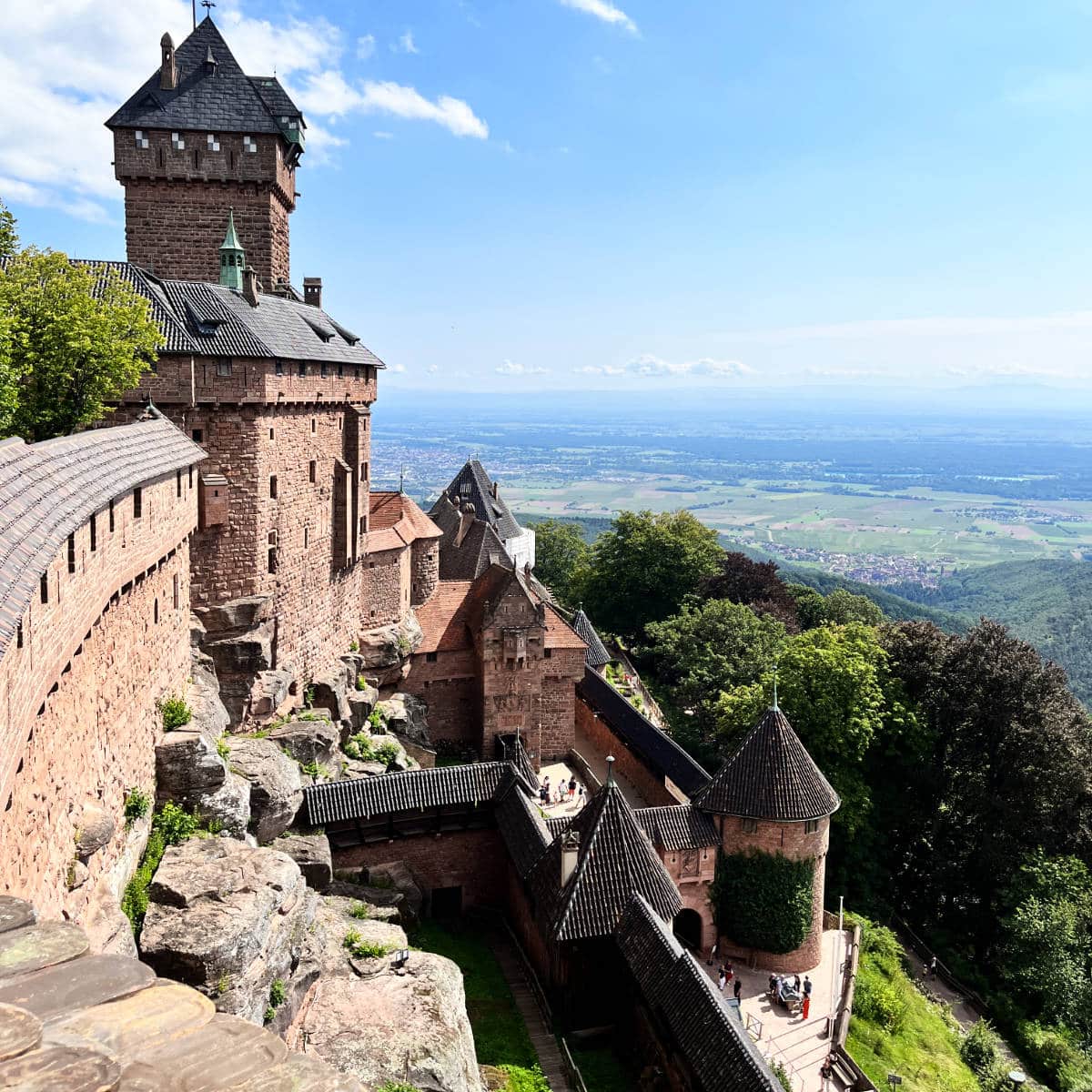
Located atop a commanding hill in the Vosges mountains in France, Château du Haut-Koenigsbourg is an ancient medieval fortress that has stood the test of time.

A historic stronghold, it is located near the town of Sélestat, along the Alsace wine route.
Where to stay
For the medieval charm of Ribeauvillé village:
- €€€ – Hôtel de la Tour
- €€€ – Hôtel Restaurant Au Cheval Blanc
For more luxurious accommodations, with pool and spa amenities:
- €€€€ – Hôtel Barrière Ribeauvillé (outside village)
History
The origins of Château du Haut-Koenigsbourg trace back to the 9th century, when a deed was issued by King Charlemagne, and a monastery located on the site.

In the 12th century, the Hohenstaufen family constructed the first fortress on this strategic site, then passing it on to the Dukes of Lorraine.
The castle is strategically perched at an elevation of approximately 757 meters (2,484 feet), overlooking the Alsace plains and the Black Forest in nearby Germany.
It was built here as a crucial defensive site throughout history, controlling key trade routes linking the Rhine River to the historic Duchy of Lorraine.
Over the centuries, it changed hands multiple times, belonging to various noble families and rulers who adapted it to the evolving demands of warfare. During the Thirty Years’ War (1618-1648), the castle was besieged and burned by Swedish forces in 1633.

Following its destruction, it remained abandoned for over two centuries, becoming an eerie ruin.
In 1899, Kaiser Wilhelm II of Germany took an interest in the ruined fortress and ordered a restoration to revive its former grandeur. The castle was reconstructed, incorporating elements from its medieval past while reflecting the Kaiser’s vision of imperial greatness.
The restoration was completed in 1908, transforming the castle into both a museum and a political symbol. After World War I, the Treaty of Versailles transferred Alsace back to France, and the château became French property. Today, it is managed by the French state and remains a key cultural and touristic attraction.
The castle
As the castle was built for defensive purposes, you will immediately notice its thick stone walls and fortified towers providing protection against invaders.

The keep served as the heart of the castle, where the lord and his court resided. The drawbridge and portcullis were essential for controlling access and deterring enemies.
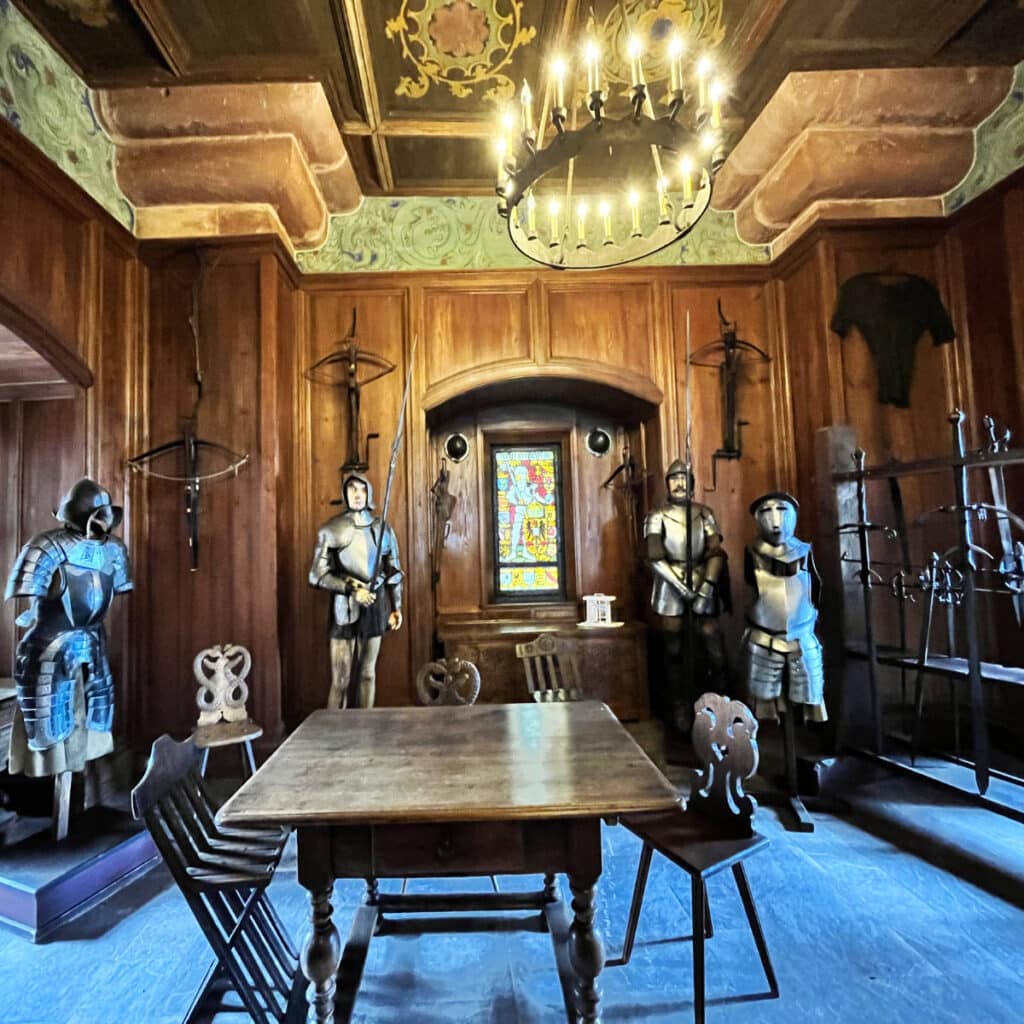
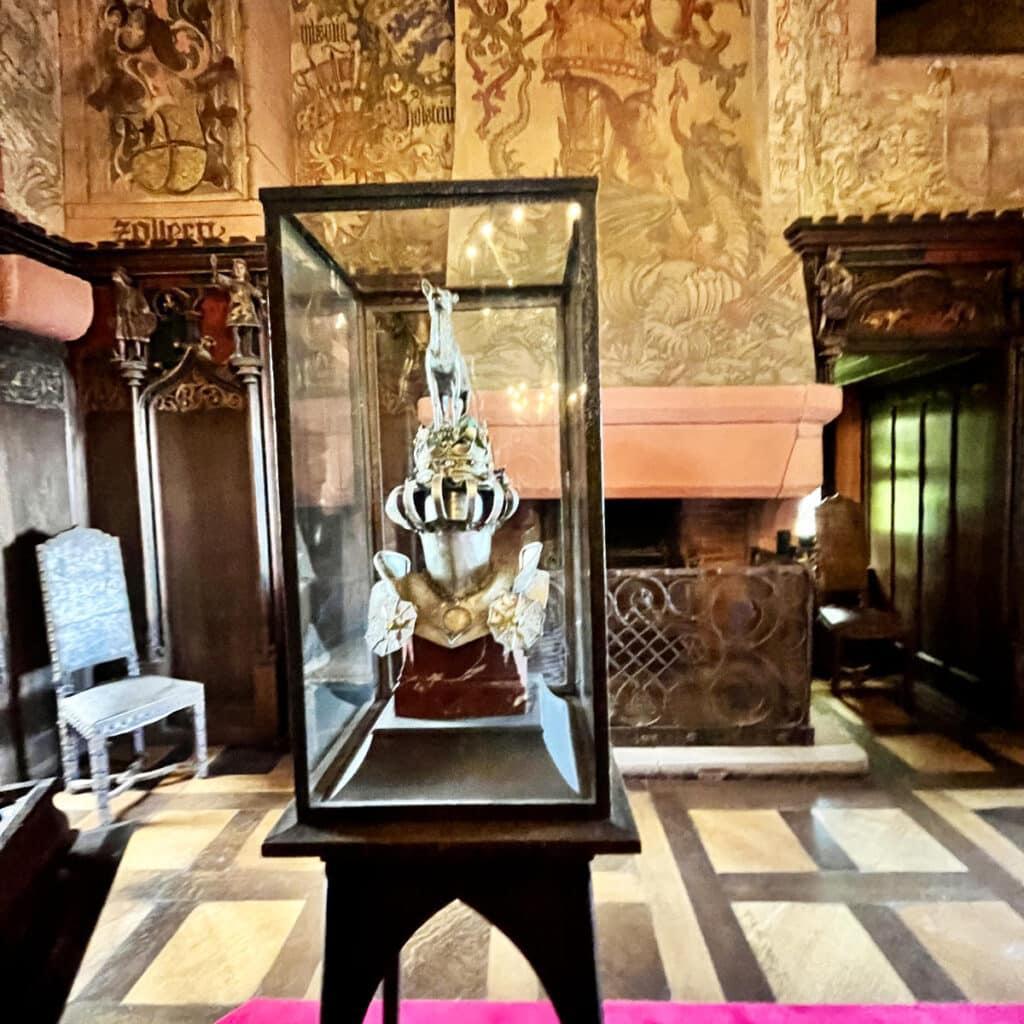
Inside, the Great Hall and Knight’s Room showcase medieval artistry and furniture, while the armory contains a collection of medieval weapons, including swords, crossbows, and cannons. The panoramic terraces offer stunning views of the surrounding countryside, highlighting the castle’s strategic location.
The Grounds
Beyond the château itself, the surrounding forested provide lovely walking trails providing an ideal setting for nature enthusiasts.

Nearby are plenty of doll-house villages such as Ribeauvillé, Riquewihr and Kaysersberg. The renowned Alsace Wine Route, featuring some of the best vineyards and wineries a short journey away.
Getting there
The castle is up on a hill with narrow roads for access, making parking difficult.
Visitors will need to park and walk around 10 minutes up to the front of castle gates in order to get access.